Rujukan:
https://www.youtube.com/watch?v=TmaxzdutGs4
Transcript
Corpus Quran
Quran
Ibrah Surah al Mulk
https://www.youtube.com/watch?v=1Kxdj1TwIYI
Tak habis video ni 
Pillars of Islam Scrapbook
20 Fun Ways to teach the 5 pillars of Islam ]]>
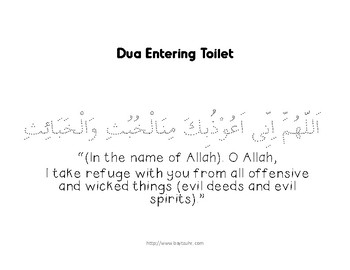
Rujukan doa dan terjemahan English di ambil di Sunnah.com
]]>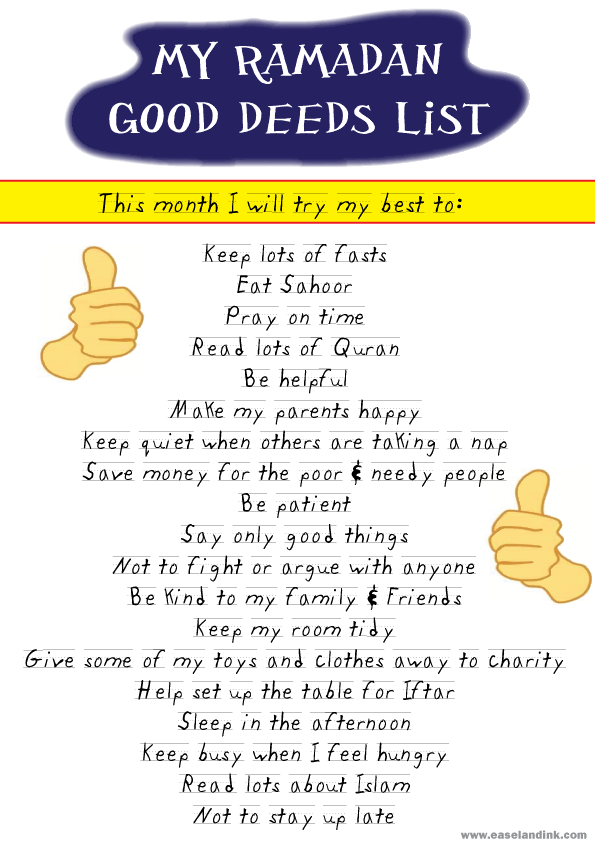
Good Deeds di Talibiddeen Jr
Salah satu perkara yang ditekankan dalam Ramadan adalah amalan baik.
In everything, of course, it is important to remember/talk about the reasons/intentions behind these good deeds….to earn the pleasure of Allah, not mom or dad or strangers (although it is nice when they are pleased with us as well).
Idea-idea untuk good deeds:
30 Days 30 Deeds Ramadan Challenge
Ramadan Kindness Calendar
30 Ramadan Days of Good Deeds Coloring Books at Muslim Mommy
30 Days of Good Deeds for a Ramadan Jar at In the Playroom
Good Deeds at Parenthood Muslim Style
Good Deeds Tree by Qamar Design
30 Days of Giving at Silver Envelope
30 Days of Kindness in Sand in My Toes
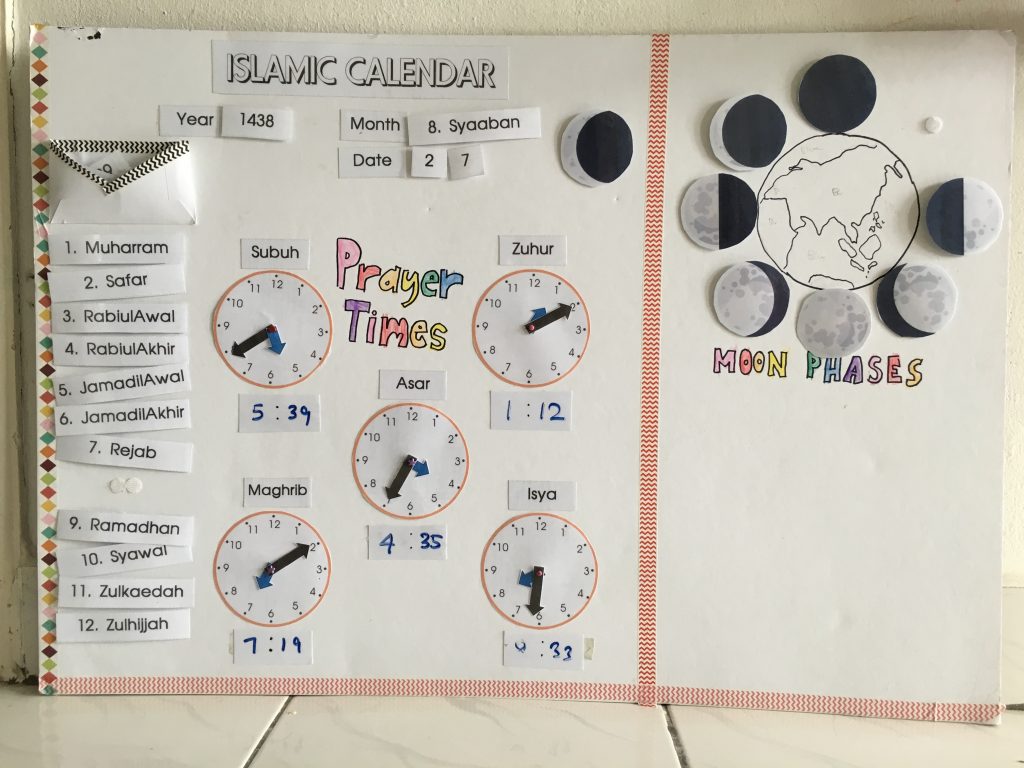
Paling baik print atas kertas cardstock. Yang dalam gambar ni saya print atas kertas dah guna, uhuk, dan laminate. I quickly regretted sebab perkataan Islamic Calendar plannya untuk budak-budak warnakan, tapi dah terlaminate dulu. Sampul tu untuk simpan nombor-nombor tarikh dan tahun. Yang boleh tukar macam tahun, bulan, tarikh, fasa bulan guna adhesive velcro. Beli dari @toysaround. Mula-mula moon phases yang lain masukkan dalam sampul juga, dan memandangkan ada kosong di tepi (terfikir untuk letak hafalan doa, ayat atau hadis *perlu beli contact paper later*) boleh juga letak moon phases in order. Lagi cantik rasanya kalau background warna hitam atau biru. Mounting board tu saiz A1 rasanya. Haris cek kalendar masa solat tulis dalam nombor dan pusing jam.
(*Tambah baik: Tambah hari: ahad, isnin, selasa, next time boleh buat dalam arabic)
Download Islamic Calendar
]]>Celebrating Cultural Diversity Ramadan at Scholastic
30 Children Activities for Ramadan at Good Tree Montessori
Ramadan Board at Yemen Links
Ramadan at KiddyHouse
Ramadan Lesson Plan for Kids at All Done Monkey
Ramadan
101 Funtastic Ramadan Crafts & Activities at Muslim Homeschool Blog
Ramadan Fact Sheet for Teachers
General Islamic Studies
Ramadan Curriculum 30 Days of Activities Curriculum Ramadan Countdownat Iman Homeschool
Ramadan Encyclopedia
Ramadan posts at A Muslim Homeschool
Ramadan posts at Ummaimoonahrecords
Ramadan at Education.com
Lesson at MuslimHomeschool
Islam Religion at Twinkl
30 Day Ramadan Dua Chart
Ramadan Rewards Activities and Preparation at Umm Assad Homeschool
Getting Kids Involved in Ramadan
The Road to Homeschool Success at Productive Muslim
Islam at The Homeschool Mom
Ramadan Activities for Children
Preparing for Ramadan, Things to Do Before Ramadan Homeschooling During Ramadan other POsts at The Muslimah Guide
Ramadan Activity Making a Ramadan Book and 30 Days Ramadan Drawing Challenge at Confession of a Muslim Momma Holic
Ramadan at Umamah Learning Academy
Ramadan
Ramadaan Our Precious Sprouts
Ramadan Our Muslim Homeschool
Ramadan at Aasiya Homeschool
Ramadan at Noorjanan
Ramadan
Ramadan Eid
Preparing your Home for Ramadan
TJ Ramadan
Ramadan at Yemenlinks
Ramadan is Coming
One Last Resource for Ramadhan
Ramadan at Confession of a Homeschooling Mom
Ramadhan at Mama Homeschool
Ramadan at Little Munas
Ramadan at Parenthood Muslim Style
My Ramadan Fun
Ramadan Maze & Crossword
Ramadan Posts at In My Studio
Ramadan 2017 at Muslim Writers Club
Ramadan Coloring at AlphaMom
Ramadan at DLTK Kids
Ramadan Printables at Qamar Designs
Ramadan Calendar at The Taboulibowl
Ramadan Worksheets
Ramadan at Homely Hammock
Ramadan Craft Challenge
Children Ready Ramadan
How to Have a Fun Ramadan With Kids and be Productive Too
Are Your Children Fasting
Ramadan Children in Qatar
Ramadan Explains
Ramadan Deco
Quran Curriculum: Surah an-Naas Project
Selepas selesai baca dan study makna ayat-ayat kedua-dua surah ini, dapat disimpulkan:
- Kedua-dua surah ini turun bersama-sama.
- Surah an-Naas, manusia diminta minta perlindungan dari Allah terhadap bisikan-bisikan yang mengganggu iman kita memujuk kita melakukan kejahatan manakala surah al-Falaq diminta manusia minta perlindungan Allah dari ciptaan Allah, kejahatan malam, ahli sihir dan penghasad dengki. Surah an-Naas untuk dalaman dan surah al-Falaq untuk luaran.
Narrated `Aisha:
Magic was worked on Allah’s Messenger (ﷺ) so that he began to imagine that he had done something although he had not. One day while he was with me, he invoked Allah and invoked for a long period and then said, “O `Aisha! Do you know that Allah has instructed me regarding the matter I asked Him about?” I asked, “What is that, O Allah’s Messenger (ﷺ)?” He said, “Two men came to me; one of them sat near my head and the other sat near my feet. One of them asked his companion, ‘What is the disease of this man?’ The other replied, ‘He is under the effect of magic.’ The first one asked, ‘Who has worked magic on him?” The other replied, ‘Labid bin A’sam, a Jew from the tribe of Bani Zuraiq.’ The (first one asked), ‘With what has it been done?’ The other replied, ‘With a a comb and the hair stuck to it and a skin of the pollen of a male datepalm tree.’ The first one asked, ‘Where is it?’ The other replied, ‘In the well of Dharwan.’ Then the Prophet (ﷺ) went along with some of his companions to that well and looked at that and there were date palms near to it. Then he returned to me and said, ‘By Allah the water of that well was (red) like the infusion of Henna leaves and its date-palms were like the heads of devils” I said, O Allah’s Messenger (ﷺ)! Did you take those materials out of the pollen skin?” He said, ‘No! As for me Allah has healed me and cured me and I was afraid that (by Showing that to the people) I would spread evil among them when he ordered that the well be filled up with earth, and it was filled up with earth ”
حَدَّثَنَا عُبَيْدُ بْنُ إِسْمَاعِيلَ، حَدَّثَنَا أَبُو أُسَامَةَ، عَنْ هِشَامٍ، عَنْ أَبِيهِ، عَنْ عَائِشَةَ، قَالَتْ سُحِرَ النَّبِيُّ صلى الله عليه وسلم حَتَّى إِنَّهُ لَيُخَيَّلُ إِلَيْهِ أَنَّهُ يَفْعَلُ الشَّىْءَ وَمَا فَعَلَهُ، حَتَّى إِذَا كَانَ ذَاتَ يَوْمٍ وَهْوَ عِنْدِي دَعَا اللَّهَ وَدَعَاهُ، ثُمَّ قَالَ ” أَشَعَرْتِ يَا عَائِشَةُ أَنَّ اللَّهَ قَدْ أَفْتَانِي فِيمَا اسْتَفْتَيْتُهُ فِيهِ ”. قُلْتُ وَمَا ذَاكَ يَا رَسُولَ اللَّهِ قَالَ ” جَاءَنِي رَجُلاَنِ، فَجَلَسَ أَحَدُهُمَا عِنْدَ رَأْسِي وَالآخَرُ عِنْدَ رِجْلَىَّ، ثُمَّ قَالَ أَحَدُهُمَا لِصَاحِبِهِ مَا وَجَعُ الرَّجُلِ قَالَ مَطْبُوبٌ. قَالَ وَمَنْ طَبَّهُ قَالَ لَبِيدُ بْنُ الأَعْصَمِ، الْيَهُودِيُّ مِنْ بَنِي زُرَيْقٍ. قَالَ فِيمَا ذَا قَالَ فِي مُشْطٍ وَمُشَاطَةٍ، وَجُفِّ طَلْعَةٍ ذَكَرٍ. قَالَ فَأَيْنَ هُوَ قَالَ فِي بِئْرِ ذِي أَرْوَانَ ”. قَالَ فَذَهَبَ النَّبِيُّ صلى الله عليه وسلم فِي أُنَاسٍ مِنْ أَصْحَابِهِ إِلَى الْبِئْرِ، فَنَظَرَ إِلَيْهَا وَعَلَيْهَا نَخْلٌ، ثُمَّ رَجَعَ إِلَى عَائِشَةَ فَقَالَ ” وَاللَّهِ لَكَأَنَّ مَاءَهَا نُقَاعَةُ الْحِنَّاءِ، وَلَكَأَنَّ نَخْلَهَا رُءُوسُ الشَّيَاطِينِ ”. قُلْتُ يَا رَسُولَ اللَّهِ أَفَأَخْرَجْتَهُ قَالَ ” لاَ، أَمَّا أَنَا فَقَدْ عَافَانِي اللَّهُ وَشَفَانِي، وَخَشِيتُ أَنْ أُثَوِّرَ عَلَى النَّاسِ مِنْهُ شَرًّا ”. وَأَمَرَ بِهَا فَدُفِنَتْ.
Reference : Sahih al-Bukhari 5766 In-book reference : Book 76, Hadith 80
Amalan-amalan Rasulullah saw:
- Sebelum tidur, Rasulullah saw baca surah al-Ikhlas, al-Falaq, surah an-Nas dan lumur tangan ke seluruh badan mula kepala, muka dan depan sebanyak 3 kali.
- Rasulullah saw baca surah al-Falaq dan surah an-Nas ketika baginda sakit.
- Ada lebih 17,000 jenis belalang di dunia!
- Kaki belakang berurat dan digunakan untuk melompat.
- Ada dua kumpulan: Long-horned & short horned, ditentukan oleh panjang antenna.
- Ada lima mata. 2 mata besar ada di sisi kepala. 2 lagi pada hujung antenna and yang akhir ada di antara antena.
- Betina lebih besar. Ada hujung tajam di abdomen, membantu bertelur. Selepas bertelur, mereka hanya pergi meninggalkan, tak perlu jaga. Melalui proses metamorphosis.
- Makan pelbagai tumbuhan dan ada yang makan rumput sahaja.
- Pemangsa termasuklah, burung, cicak, labah-labah, dan rodents.
- Ada sesetengah belalang keluarkan bunyi dengan rubbing their wings together.
- Pernah dengar tak? Kalau pernah, tulah belalang jantan!
فَأَرْسَلْنَا عَلَيْهِمُ ٱلطُّوفَانَ وَٱلْجَرَادَ وَٱلْقُمَّلَ وَٱلضَّفَادِعَ وَٱلدَّمَ ءَايَٰتٍ مُّفَصَّلَٰتٍ فَٱسْتَكْبَرُوا۟ وَكَانُوا۟ قَوْمًا مُّجْرِمِينَ
(Allah berfirman): Kami pun menghantarkan kepada mereka taufan, dan belalang, dan kutu, dan katak, dan darah, sebagai tanda-tanda dan bukti yang jelas nyata, maka mereka juga tetap berlaku sombong takbur dan menjadi kaum yang menderhaka.
From National Geographic
A plague of locusts is a devastating natural disaster. These infestations have been feared and revered throughout history. Unfortunately, they still wreak havoc today.
Locusts are related to grasshoppers and the two insects look similar. However, locust behavior can be something else entirely. Locusts are sometimes solitary insects with lifestyles much like grasshoppers. But locusts have another behavioral phase called the gregarious phase. When environmental conditions produce many green plants and promote breeding, locusts can congregate into thick, mobile, ravenous swarms.
Locust swarms devastate crops and cause major agricultural damage and attendant human misery—famine and starvation. They occur in many parts of the world, but today locusts are most destructive in sustenance farming regions of Africa.
The desert locust is notorious. Found in Africa, the Middle East, and Asia, they inhabit some 60 countries and can cover one-fifth of Earth’s land surface. Desert locust plagues may threaten the economic livelihood of one-tenth of the world’s humans.
A desert locust swarm can be 460 square miles (1,200 square kilometers) in size and pack between 40 and 80 million locusts into less than half a square mile (one square kilometer).
Each locust can eat its weight in plants each day, so a swarm of such size would eat 423 million pounds (192 million kilograms) of plants every day.
Like the individual animals within them, locust swarms are typically in motion and can cover vast distances. In 1954, a swarm flew from northwest Africa to Great Britain. In 1988, another made the lengthy trek from West Africa to the Caribbean.
Bacaan sendiri:
Like Locusts
Locusts moving in swarms