Smelling bottle adalah salah satu apparatus yang tak perlu beli. Yang ni sangat mudah untuk buat sendiri. Saya beli salt shakers (paling digalakkan beli yang boleh ditutup-fliptop) di kedai MrDIY. Lebih kurang RM1 satu botol dan saya beli 8 botol, untuk 4 bau yang berbeza, setiap satu bau, dua botol.
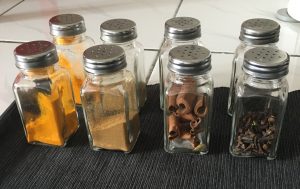
Bahan-bahan untuk bau pun mudah. Hanya ambil spices, herbs, buah-buah yang ada di dapur. Bau yang memang anak kita hidu hari-hari. Boleh juga ambil dari ubat-ubatan contoh vics, minyak urut, juga bauan pewangi, ambil dari essential oils seperti lavender, rose, jasmine, etc) (*bila guna essential hati-hati pilih ditakuti ada kesan alergik). Dan kalau guna serbuk please bila hidu tu jauhkan sikit supaya serbuk-serbuk tu tak masuk dalam hidung. Masa demo tu pastikan sniff dengan perlahan and with distance and keep reminding them so.
Tujuan aktiviti ni adalah untuk bantu membangkitkan dan memperhalusi deria olfaktori anak dan untuk bantu anak sedar ada banyak dan macam-macam bau dan wangian di sekelliling mereka!
Baca sini untuk cara kenalkan aktiviti ni.
Kalau ikut sebetulnya Smelling Bottle Montessori tak nampak isi dalam. Bagi yang guna container yang boleh nampak, boleh blindfold anak-anak dan minta mereka cari bau yang sama. Bila mereka buka blindfold tu boleh tengok sendiri betul atau salah mereka match! Masa Hana buat ni masa first time, semua salah match. Samalah dengan Haris. Especially bau jintan dan kunyit! Bila buat beberapa kali baru boleh betul-betul dapat bezakan warna kedua tu dam match dengan betul semuanya.
Footnote dari Montessori Commons:
- Substances should be natural and non-toxic
- Encourage the child to smell flowers, herbs, leaves, bark in the garden, food and drink in the kitchen and recognise other scents
- Change the material regally to maintain interest and give a wider variety. Use different bottles or clean using bicarbonate of soda or similar to neutralise smell
- Avoid exchanging the lids as the scents will become contaminated
- Indirectly show that you are limiting the amount of scent you inhale by keeping the bottle at a distance
- Suggest that the child closes her eyes or uses a blind fold to bring further focus
Untuk toddlers boleh ikut cara di Mama’s Happy Hive. Just introduce them to different smells.
Latihan lain yang disarankan dalam buku Gettman:
- Beri 3 period lesson kepada nama bau-bau yang digunakan.
- Letak satu set smelling bottles di satu tempat dan satu lagi di tempat (jarak jauh), minta dia hidu dan cari bau yang sama pada set satu lagi, bring back, verify and put back. Continue as long as the child enjoys it.
- Bring the smelling bottles (hmm mungkin pasar if spices) dan minta cari bau yang seakan sama.
- Outdoor walk dan explore bau-bauan.
More fun ideas:
]]>
It is He, Who has created for you (the sense of) hearing (ears), sight (eyes), and hearts (understanding). Little thanks you give.
Sense of Sight
Part: Eyes
Detect color and light
Activities:
1. Walking blindfolded
2. Drawing blindfolded
3. See and do things with one eye closed.
4. Observation & Memorisation
5. Optical Illusions Games
Sense of Hearing
Part: Ears
Detect sound
Interactive Explanation on Sense of Hearing
Activities:
Exploring Sound with a Hangar and String from Buggy and Buddy
Listening Scavenger Hunt
Various Sounds from various household materials
Making Music
Matching sounds using jar/balloon
Blindfold and guess sound
Sounds Words of the World with audio
Sound Words’ List
Sound Words in Bahasa
Sense of Smell
Nose
Detects scents
Interactive Explanation on Sense of Smell
The Smell Detective – a fun activity using spices.
The Smell Eraser
Experimenting with things that smell
Exploring 5 senses activities in kitchen
Smelling Bottles
-
Blindfolded Smell Test: Blindfold the child and place some familiar scents under his/her nose, such as chocolate, cinnamon, paint, etc. Ask him/her questions such as the following: What do you smell? Do you recognize it? Does it remind you of something else?
-
Scratch and Sniff: Collect some flowers, spices, or herbs that have a strong smell. Glue some of these items on cardboard or index cards. Have the child guess what the smell is, or use these cards for matching or memory games.
-
Combining Smells: Have the child smell approximately 10 things that he/she is familiar with. Together, come up with a list of the items that the child smelled. Now, mix at least two smells together, and have the child guess which two (or more) are paired together. Can he/she correctly guess the combination? Can he/she pick out each smell? Have fun naming the new combinations of smells!
Sense of Touch
Part: Skin
Detects pain, pressure, heat and cold
Smell Touch Activity
Tissue Box Touch
It Feels… activity
From ReadWriteThink.com
-
Feeling With Your Feet: Have the child, barefooted, feel things with his/her feet and think about the way it feels. Some things that you may wish to the have child feel include paint, playdough, grass, carpet, etc. Ask the child questions about what he/she is feeling: What does it feel like? Do you like the way it feels? Is it rough or smooth? Cold or hot? Does it tickle your feet? Do the same activity with your hands!
-
Pillow Play: Place familiar objects inside of an empty pillowcase. Let the child try to guess what the objects are. Help the child describe how each object feels. Vary the activity by using holiday/seasonal items or items with a theme such as animals or shapes.
-
Make a Mess: Let the child play with materials like clay, water, sand, rice, playdough, and gelatin. Let the child explore the feel of these items and describe how they feel. Make sure to find an outdoor area or an indoor area where it’s safe to get messy!
Sense of Taste
Part: Tongue
Detects tastes: sweet, salty, sour and bitter
Interactive Explanation on Sense of Taste
-
Try a Taste Test: To teach about the tongue and different tastes, place approximately 1 teaspoon of different ingredients in different cups. Use ingredients like salt (salty), sugar/honey (sweet), lemon/lime (sour), and grapefruit juice (bitter). Add a few drops of water to the dry ingredients. Dip a cotton swab into each ingredient and have the child touch it to different areas of his/her tongue. Make sure to rinse out the mouth with water between each sample! Talk with the child about how our taste buds affect why we are only able to taste certain flavors on certain areas of our tongue.
Lesson Plan
Good list of activities for each senses
Engaging Five Senses
Fun Senses Facts for Kids
Five Senses Facts
Five Senses ABCya
Mini Book & Worksheets at Kizclub
Video:
Five Sense Video
Good introduction and information about how senses and brain work at The Children’s University of Manchester
Experiments:
All About Your Senses Experiment
Games:
Sid the Science Kid
Help Monk with Five Senses
Game about Sound with Magic School Bus
Hana:
Five Senses for Preschoolers
Blogs
Montessori Sensory Activities
Montessori Inspired Five Senses Activities
Revisited: 19 Okt 2015
Let them use their five senses to explore the pumpkins:
What does a pumpkin sound like when you thump it?
What does the shell feel like? Is it hard or soft? Is it bumpy or smooth?
What does the inside feel like? Is it slimy?
What does it smell like? Does it smell the same as a cup of pumpkin pie filling?
What does it look like? Describe its size and shape. Describe its color.
What does it taste like? Make some muffins or pancakes. Roast the seeds for a tasty snack